
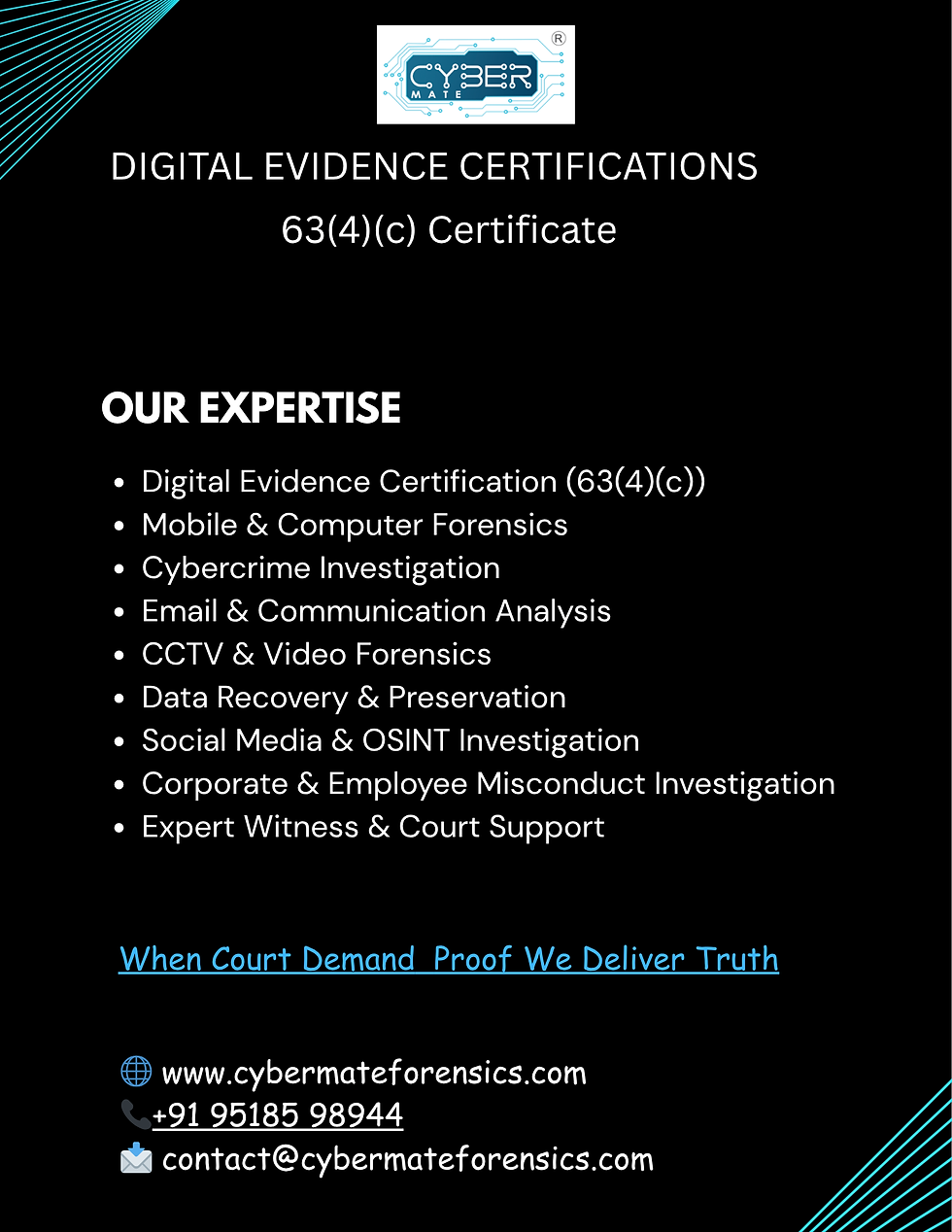
What is 63(4)(c) Certificate? Digital Evidence Law India Explained

Introduction:
In today’s digital-first environment, electronic records play a crucial role in legal proceedings. Emails, WhatsApp conversations, CCTV footage, call recordings, and server logs are increasingly used as evidence in courts across India.
However, digital evidence is not automatically admissible in court. Without proper legal certification, even highly relevant digital proof can be rejected. This is where the 63(4)(c) Certificate becomes essential.
A 63(4)(c) Certificate is a legal document that validates the authenticity and integrity of digital evidence.
It confirms that:
- The electronic record has been obtained from a legitimate source
- The data has not been altered or tampered with
- A proper forensic process was followed
- The system used was reliable
Legal Framework in India:
The admissibility of digital evidence in India is governed by the Indian Evidence Act, 1872. Section 63 deals with secondary evidence, including electronic records.
Why is the Certificate Important?
- Ensures legal admissibility
- Establishes data integrity
- Strengthens legal cases
- Maintains chain of custody
Types of Digital Evidence Covered:
- WhatsApp chats
- Emails
- CCTV footage
- Call recordings
- Hard drives and mobile data
- Social media content
Who Can Issue It?
Certified digital forensic experts and professional firms like Cybermate Forensics.
Process to Obtain Certificate:
1. Evidence Identification
2. Secure Collection
3. Forensic Extraction
4. Integrity Verification
5. Documentation
6. Certificate Issuance
Common Mistakes:
- Submitting screenshots without certification
- Not securing original devices
- Editing data before submission
- Using unauthorized certifiers
Conclusion:
The 63(4)(c) Certificate ensures your digital evidence is legally valid and admissible in court.
Contact Cybermate Forensics for professional assistance:


Comments